Many high school teachers want Black History Month lessons that go beyond timelines and short biographies. Students need opportunities to think critically, analyze sources, and engage in real discussion about Black history.
Below are effective ways to teach Black History Month in high school classrooms while building research, writing, and media literacy skills.
Use Inquiry Instead of Memorization
Rather than focusing on dates and facts, center lessons around questions such as:
- How did this individual challenge the systems of their time?
- What obstacles shaped their impact?
- Why does their legacy still matter today?
Inquiry-based questions lead to stronger discussion and deeper writing.
Combine Primary and Secondary Sources
Pair biographies with primary sources like interviews, speeches, poetry, and archival footage. This helps students evaluate perspective, credibility, and historical context, which are essential skills in U.S. History and ELA classes.
Make Media Literacy Part of the Lesson
Video clips can be powerful teaching tools when used intentionally. Assign specific viewing goals and require written or discussion-based responses so students actively analyze what they watch.
Highlight the Breadth of Black History
Include Black leaders from science, mathematics, medicine, literature, music, aviation, politics, and civil rights. This gives students a more accurate and complete picture of Black history in the United States.
Center Writing and Discussion
Strong Black History Month activities include short research responses, comparative writing, and evidence-based discussion. Digital journals allow students to organize ideas and revise over time.
A Flexible Black History Month Research Option
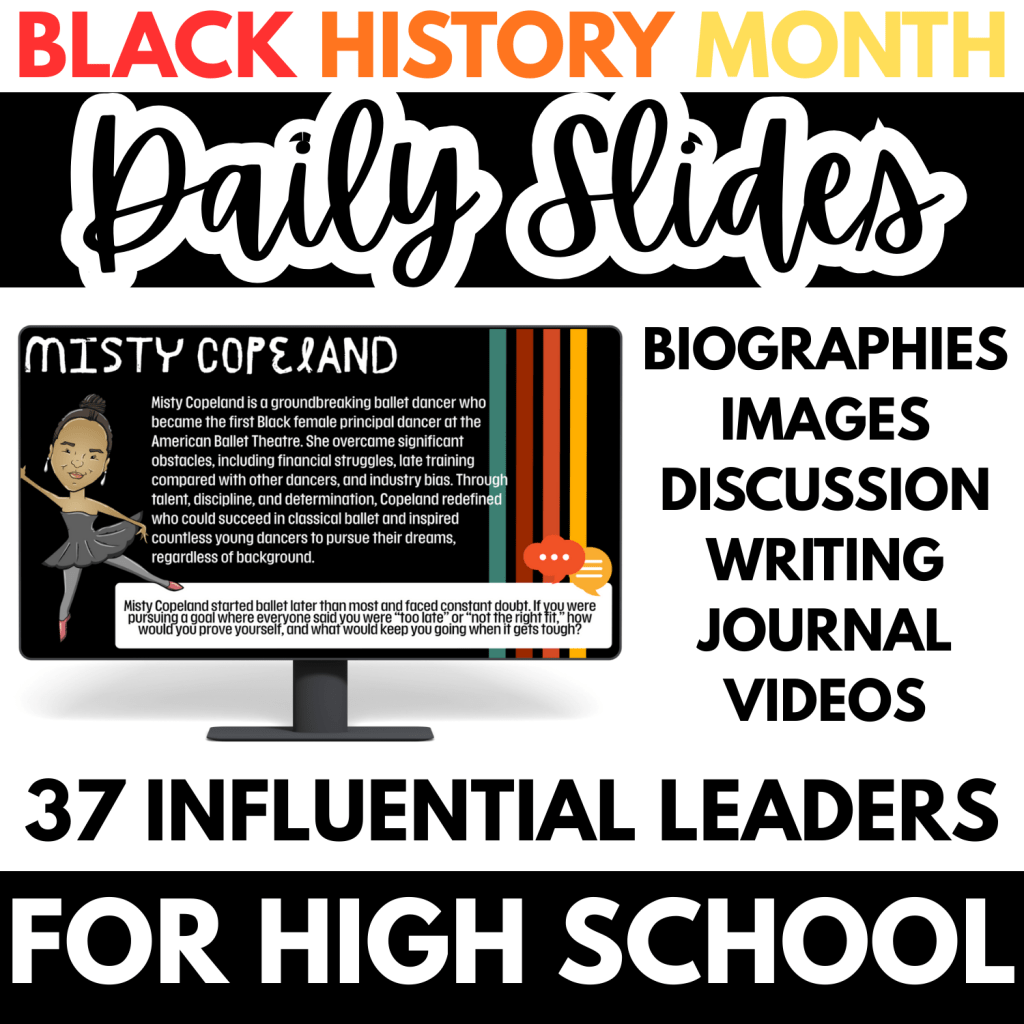
For teachers who want a ready-to-use resource, this Google Slides Black American History Research Project for grades 10 to 12 includes 37 influential Black Americans, high-level discussion and writing prompts, curated videos, and a digital student research journal. The slides are editable and work well for bell ringers, weekly research, or full inquiry projects.
Focus on Depth
Black History Month should build real skills and historical understanding. When students research, analyze sources, discuss ideas, and write with evidence, learning becomes meaningful and lasting.
 The Reading and Writing Nook
Leave a comment